Learn Forex

Bullish Harami Pattern: Definition, Examples & How to Trade It

March 3, 2026

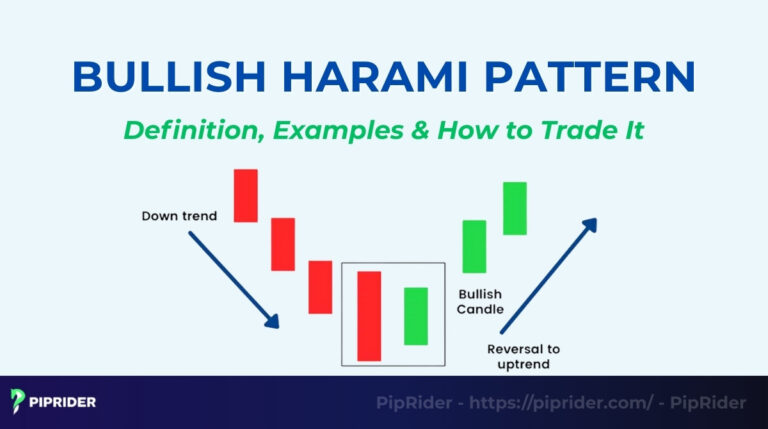
Bullish Harami Pattern: Definition, Examples & How to Trade It

The Bullish Harami Pattern is a reliable reversal signal when found in a downtrend at key support levels. This formation on a candlestick chart shows...

Latest article

Continuation Candlestick Patterns: Definition And Strategies

March 10, 2026

Continuation Candlestick Patterns: Staying In Winning Trades

Continuation candlestick patterns are trend-pause setups that can offer clean entries when the trend context and confirmation are present. Treat them as probabilistic signals, your edge comes from structure, confirmation, and risk control, not the pattern name. This guide delivers the structural and psychological insights required to identify both bullish and bearish continuation setups and...


CFD Trading: A Comprehensive Guide For Beginners

February 13, 2026

CFD Trading 2026: Mastering Leverage & Risk Management

CFD trading (Contract for Difference) is a flexible yet high-risk financial instrument that lets traders profit from asset price movements without taking physical ownership. This comprehensive guide delivers a clear overview of CFDs, covering the definition, mechanics, key benefits, and associated risks. You will find practical instructions on how to start trading, how to choose...


VWAP Indicator: A Comprehensive Guide to Volume-Weighted Trading

February 12, 2026

VWAP Indicator: The Only Volume Guide Day Traders Need

This article provides a detailed overview of the VWAP indicator (Volume-Weighted Average Price). It explains the formula, practical applications, and popular trading strategies using this tool. The guide directs traders on how to differentiate VWAP from other average indicators, identify its critical limitations, and understand crucial caveats for maximizing trading efficiency. 1. What is the...


TTM Squeeze: Guide To Volatility & Breakout Strategy

February 10, 2026

TTM Squeeze Indicator: Best Settings & Breakout Strategy

Many traders struggle to identify periods of consolidation right before a major market move. The TTM Squeeze indicator, developed by John Carter, was specifically designed to address this challenge. It accurately signals these quiet periods of low volatility, which often precede an explosive breakout. This comprehensive guide provides a detailed methodology for using the TTM...


True Strength Index TSI: A-Z Guide To Momentum & Strategy

February 9, 2026

True Strength Index TSI: Smoothing Out Price Action Noise

The True Strength Index (TSI) is a momentum oscillator that uses a unique double-smoothing technique to filter out market noise. Unlike standard indicators, TSI provides a crystal-clear view of the trend by focusing on three critical signals: Zero-Line Bias (Trend Direction), Signal Crossovers (Entry Timing), and Divergence (Reversal Warnings). In this guide, Piprider breaks down...


Mastering The Long Legged Doji: Advanced Technical Analysis

March 12, 2026

Long Legged Doji: Trading Market Indecision Effectively

The Long-Legged Doji (LLD) is a significant single-candlestick formation that identifies high volatility and a temporary balance between buyers and sellers. It is not a guaranteed directional signal, but rather a warning that the current trend’s momentum may be reaching a state of exhaustion. For experienced traders, recognizing this state of market neutrality helps improve...


resistance drawing

February 2, 2026

Resistance Drawing: Identifying High-Probability Sell Zones

Resistance drawing is a fundamental skill in technical analysis, used to identify specific price zones where selling pressure historically halts rallies. However, many traders struggle to distinguish between a minor hurdle and a major market barrier. This guide provides a repeatable framework to plot high-quality resistance levels on any chart. By mastering this process, you...


Start learning Forex for beginners

Begin your trading journey with a solid foundation. Learn what Forex is,
important concepts, and avoid common mistakes.

Level 1: Beginner

For those who need to know what Forex is and the basics.

1

2

Level 2: Intermediate

For those who need to know how to trade and apply simple analysis.

Level 3: Advanced

For those who need to know why strategies work and how to improve them.

3

4

Level 4: Expert

For those who need to know how to build systems and optimize long-term.