CFD trading (Contract for Difference) is a flexible yet high-risk financial instrument that lets traders profit from asset price movements without taking physical ownership. This comprehensive guide delivers a clear overview of CFDs, covering the definition, mechanics, key benefits, and associated risks. You will find practical instructions on how to start trading, how to choose a reliable broker, and essential risk management strategies for successful trading.
Key Takeaways
- A CFD is speculation on price movement; no physical ownership of the underlying asset occurs.
- Leverage allows traders to control large positions with a small deposit, greatly amplifying potential returns.
- Risk is amplified equally by leverage, creating the potential for losses to exceed the initial capital.
- CFDs enable profit seeking in both rising markets (Long) and falling markets (Short).
- Strict Stop-Loss usage and practice on a practice account are the core rules for long-term survival.
1. What is CFD Trading?
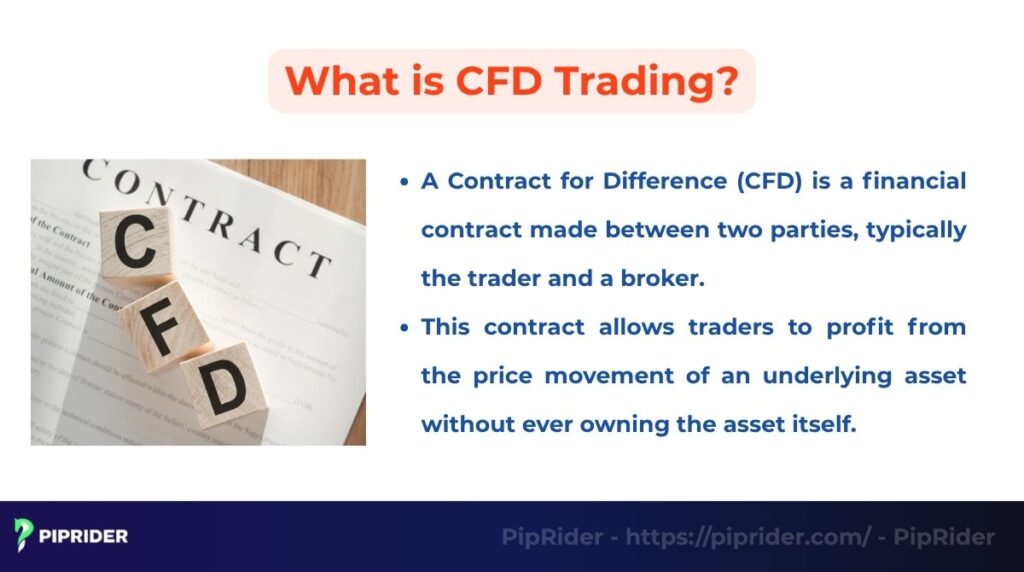
A Contract for Difference (CFD) is a financial contract made between two parties, typically the trader and a broker. This contract allows traders to profit from the price movement of an underlying asset without ever owning the asset itself.
CFDs are not about buying or selling physical goods or securities. They are simply an agreement to pay (or receive) the difference in the asset’s price between the time the position is opened and the time it is closed.
- Derivative Tool: CFDs are a popular derivative instrument because their value is derived from the price of the actual asset (like a stock, index, currency pair, or commodity).
- High Risk: Data from the CFTC (U.S.) and European financial regulators indicates that CFDs are a high-risk form of investment. They are primarily suited for traders with experience and knowledge due to the use of leverage.
- Alternate Names: In standard Forex Trading Terminology, CFDs are often referred to as “price difference contracts” or “leveraged margin trading”.
Example: When traders open a CFD position on Apple stock, they aren’t buying shares; the action is simply making a bet with the broker on whether Apple’s price will go up or down. If the bet is correct, the broker pays the difference; if incorrect, the client pays the difference to the broker.
2. Key Advantages of CFD Over Traditional Investments
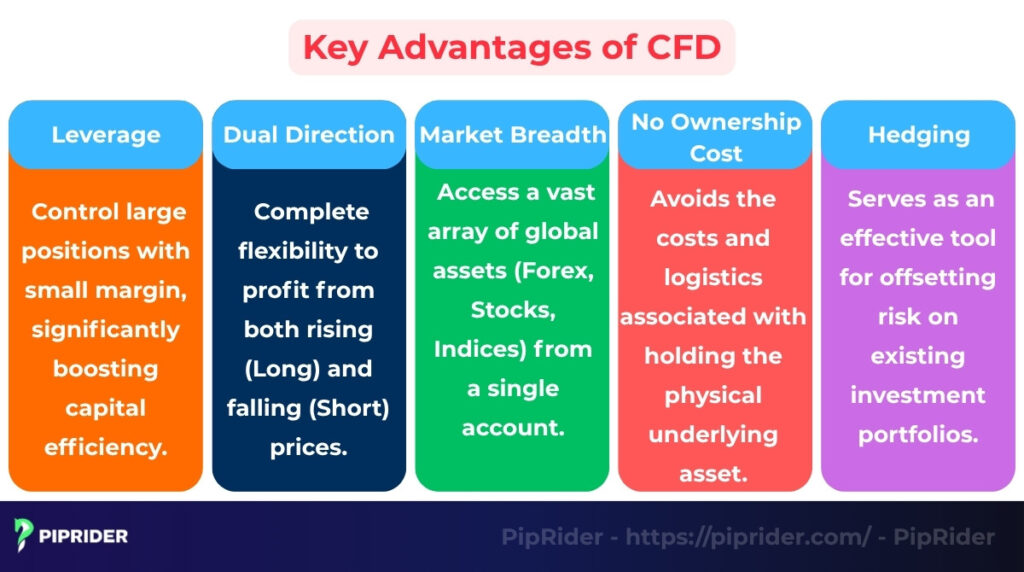
CFD is highly valued by investors for its flexibility and capital efficiency, offering distinct benefits compared to buying and owning assets directly.
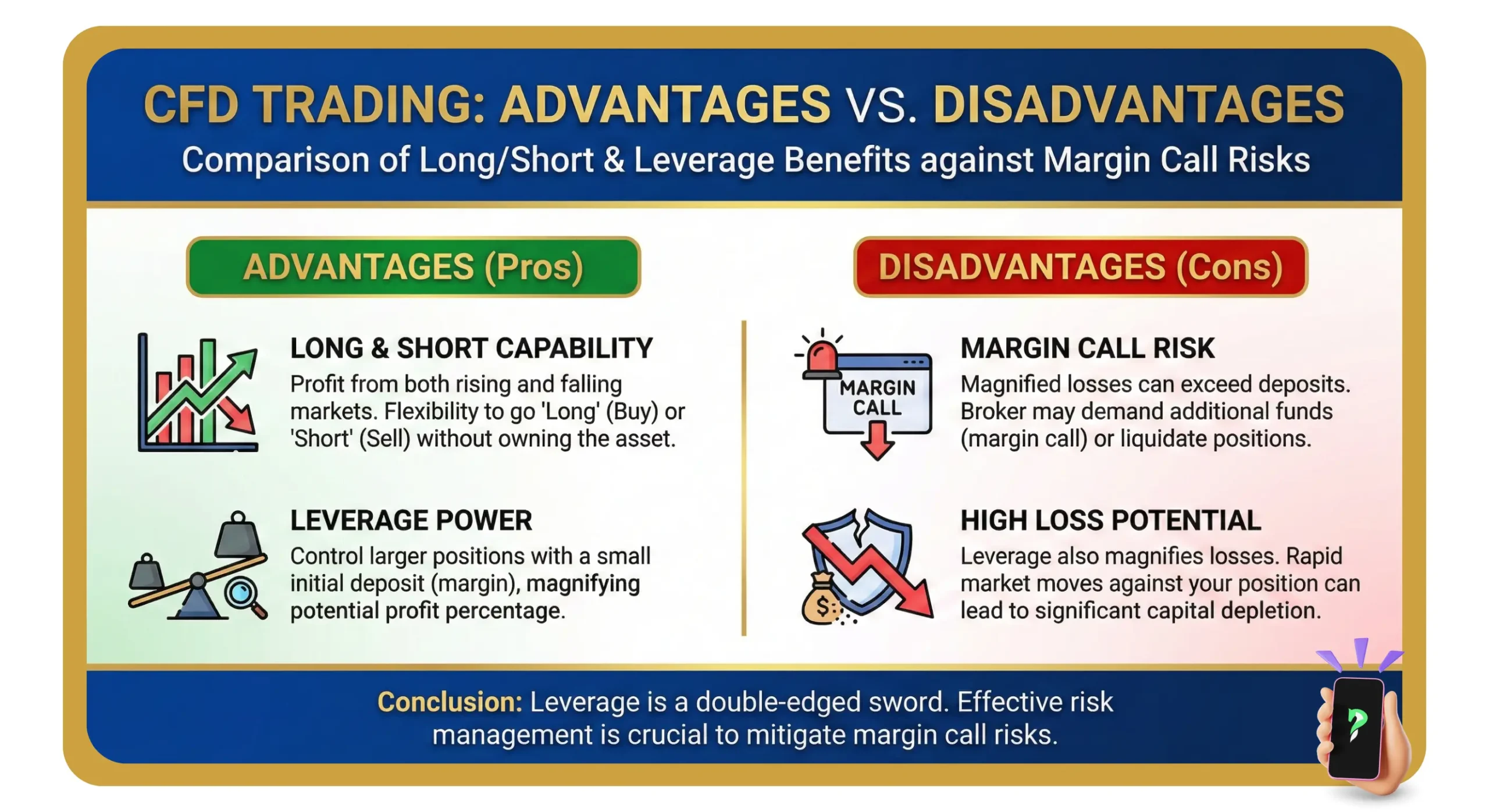
- Leverage: allows control of a large market position with a small initial deposit (margin). This capability significantly boosts the potential return on capital compared to traditional trading where the full value must be paid upfront
- Dual trading direction (Long and Short): Profit can be made whether the asset price is rising (by Going Long) or falling (by Going Short)
- Market breadth: A single CFD account provides quick access to a vast array of global markets, including Forex, stocks, indices, and commodities, allowing for easy and rapid portfolio diversification
- No physical ownership: Since trading involves only the contract’s value, the complications, costs, and taxes associated with the physical ownership or delivery of the underlying asset are avoided
- Hedging potential: CFDs are an effective tool for hedging (offsetting risk). They can be used to mitigate potential losses on existing physical investments by taking an opposite position with a CFD
3. The Disadvantages and Risks of CFD Trading
While the advantages are appealing, CFDs carry significant risks that every beginner must understand before committing capital
- Leverage Amplification: Leverage is a “double-edged sword.” While it can boost profits, it magnifies losses in the exact same proportion. A small market move against your position can result in a total loss of your initial margin
- Counterparty Risk (OTC Nature): Unlike stocks traded on a public exchange, CFDs are Over-The-Counter (OTC) products. Your contract is with the broker, not the exchange. If the broker is not financially stable or regulated, you face the risk that they may not be able to meet their financial obligations (counterparty risk)
- Market Gaps and Slippage: During periods of extreme volatility, market prices can “gap” (jump from one price to another without trading in between). This can result in Slippage, where your stop-loss is executed at a much worse price than intended
Overtrading and Psychology
The ease of access and high leverage can lead to emotional trading. Beginners often fall into the trap of overtrading or “revenge trading” after a loss, which quickly depletes their account balance
| Feature | CFD Trading | Traditional Stock Trading | Futures Trading |
| Asset Ownership | No (contract value only) | Yes (physical shares) | No (standardized contracts) |
| Leverage | High (primary feature) | Low/None (Margin loans apply) | High |
| Going Short | Easy and accessible | Requires borrowing the asset (often complex) | Easy |
| Flexibility | High (open/close anytime) | High | Fixed expiry |
4. How CFD Trading Works?
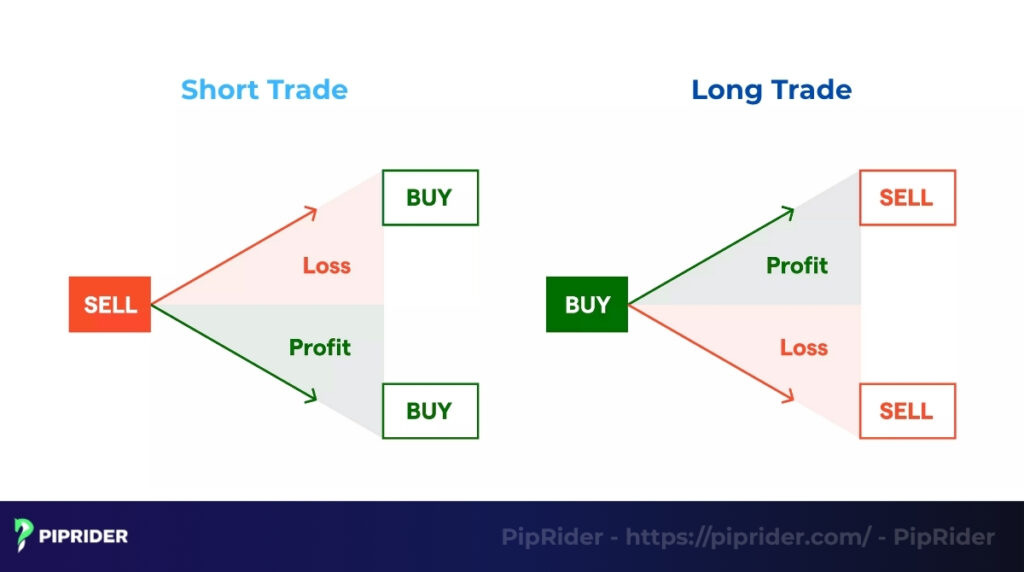
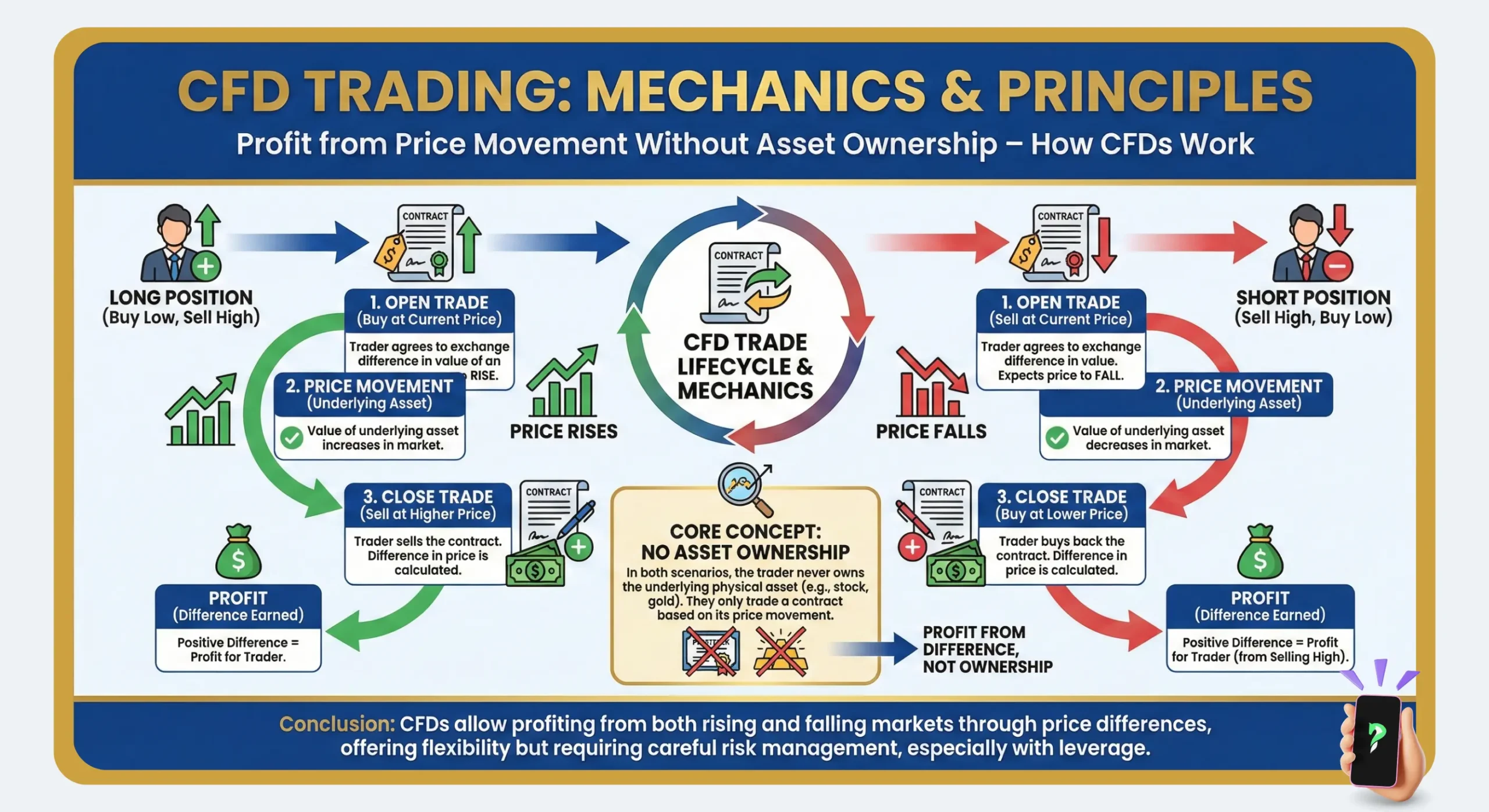
CFD operates purely on the difference in the underlying asset’s price during the trade period. When a CFD position is opened, the trader is speculating whether the price of the asset will rise or fall.
4.1. Profit and Loss Calculation
The mechanism is straightforward: Profit or loss is calculated by multiplying the change in the asset’s price by the size of the contract – The number of CFD contracts traded (conceptually similar to forex lot sizes when trading currency CFDs).
- Long trade (expecting a rise): If the opening price is $100 and the closing price is $105, the $5 difference is multiplied by the contract size. This establishes a long position
- Short trade (expecting a drop): If the opening price is $100 and the closing price is $95, the $5 difference is again multiplied by the contract size. This establishes a short position
4.2. The Role of Leverage and Margin
The unique feature of CFDs is the use of leverage. This tool means the trader only needs to deposit a small fraction of the total trade value, known as margin, to control a much larger position.
- Example of magnified return: If a trader uses 10:1 gearing on a stock, and the stock’s price increases by just 5%, the return on the initial margin deposit could be magnified to 50% (5%×10).
- The risk: While leverage boosts potential profit, it proportionally magnifies potential losses, which can exceed the trader’s initial margin deposit.
4.3. Associated Trading Costs
Beyond market risk, traders must account for several costs that impact profitability:
- Spread: The difference between the buy and sell price, which is the primary cost charged by the broker
- Commission: A service fee applied to each trade, often used for Stock CFDs
- Overnight financing (swap): A charge applied to positions held open past the market’s close, reflecting the cost of borrowing funds to keep the leveraged position open
- Dividend adjustments: For Stock CFDs, your account may be credited or debited based on dividend payouts of the underlying company
- Currency conversion fee: Applied when trading assets denominated in a currency different from your account base currency
- Slippage: The difference between the expected price and the price at which the trade is actually executed during high volatility
To measure Spread effectively, you need to understand the unit of price movement. Many beginners ask what are pips in forex trading to figure out how these tiny fluctuations determine the total fee paid to the broker.
5. Margin Call vs. Stop-Out: The Mechanics of Liquidation
Understanding when a broker will close your trades is vital for capital survival
- Margin level: This is the ratio of equity to used margin (equity / margin × 100%)
- Margin call: A warning from the broker when your margin level drops below a certain threshold (e.g., 100%). You must either deposit more funds or close positions
- Stop-out: The point at which the broker automatically closes your open positions to prevent further losses. Under FCA/ASIC/ESMA rules, this is usually set at 50% margin level
Worked example:
- Equity: $1,000
- Trade: You open a $10,000 position using 10:1 leverage. Used margin = $1,000
- Market move: The price moves against you, and your floating loss is -$500
- Current equity: $1,000 – $500 = $500
- Margin level: ($500 / $1,000) × 100% = 50%
- Result: The broker triggers a stop-out, automatically closing your position to protect your remaining $500
6. Global Regulations and Investor Protections
To protect retail traders, major financial regulators (ESMA, FCA, ASIC) have implemented “product intervention orders” that standardize how CFDs are offered
6.1. Leverage caps (restrictions)
Regulators limit the amount of leverage a broker can offer to retail clients to prevent excessive risk-taking. Common limits include:
| Asset class | Standard leverage cap | Regulators |
| Major Forex pairs | 30:1 | FCA, ASIC, ESMA |
| Non-major Forex, gold, indices | 20:1 | FCA, ASIC, ESMA |
| Commodities (other than gold) | 10:1 | FCA, ASIC, ESMA |
| Individual equities (stocks) | 5:1 | FCA, ASIC, ESMA |
| Cryptocurrencies | 2:1 | FCA, ASIC, ESMA |
6.2. Mandatory safety mechanisms
Trading leveraged instruments carries significant risk. To shield retail participants from catastrophic financial exposure, top-tier global regulators mandate a strict framework of built-in safeguards. Any broker operating under a reputable license is legally required to implement the following mandatory safety mechanisms:
- Negative balance protection (NBP): This ensures that a retail client’s total losses cannot exceed their total account balance. You cannot “owe” the broker money beyond your deposit
- Margin close-out rule: Brokers are required to close out one or more of a retail client’s open CFDs when the account’s equity falls below 50% of the initial margin required to maintain those positions
- Standardized risk warnings: Brokers must disclose the percentage of retail investor accounts that lose money trading CFDs with them
7. Popular Asset Classes in CFD
One of the most appealing aspects of CFD trading is the wide access it provides to a variety of global markets through a single account. This diversity allows traders to easily diversify their portfolio and apply strategies across different asset types. Trading hours vary depending on the asset class and exchange.
Traders can typically access CFDs on the following major groups:
- Stocks: CFDs on individual company shares from global exchanges (e.g., Apple, Amazon, Tesla).
- Stock Indices: CFDs representing a basket of stocks from a specific market (e.g., S&P 500, Nasdaq, Dow Jones).
- Forex (Foreign Exchange): CFDs on currency pairs, including majors (e.g., EUR/USD, GBP/USD) and minors, serving as the primary vehicle for global currency trading.
- Commodities: CFDs on raw materials like hard commodities (e.g., Gold, Silver, Oil) and soft commodities (e.g., agricultural products).
- Cryptocurrencies: CFDs on popular digital currencies (e.g., Bitcoin, Ethereum, Ripple).
| Asset Class | Underlying market | Key characteristics |
| Forex | Global currency markets | High liquidity, available 24/5, often involves high leverage. |
| Stock indices | Global stock exchanges | Reflects overall market sentiment, less volatile than individual stocks, good for macro trading. |
| Commodities | Energy, metals, agriculture | Price influenced by global supply/demand, geopolitics, often used as an inflation hedge (Gold). |
| Stocks | Individual company equities | Highly specific risk (company news/earnings), requires detailed fundamental analysis. |
| Cryptocurrencies | Digital currency markets | Extremely high volatility, available 24/7, suitable for short-term speculation. |
8. Leverage, Risk, and Risk Management
Leverage is the double-edged sword of CFD trading. While it allows for high profit potential from a small margin deposit, it is the primary source of risk because it proportionally amplifies losses. Losses can quickly exceed initial capital, making strict risk control non-negotiable.
Due to the magnified risk, long-term survival in CFD depends entirely on discipline. In the book “Market Wizards: Interviews with Top Traders”, author Jack D. Schwager quotes Bruce Kovner, the founder of Caxton Associates, as saying:
“Risk management is the absolute most important element to leveraged trading.”
Key practices required to mitigate risk include:
- Set a stop-loss limit: This is mandatory. A Stop-Loss order automatically limits potential loss on any single trade to a predetermined, acceptable amount.
- Limit capital exposure: Never risk more than a small percentage of your total trading capital (e.g., 1% to 2%) on any single transaction.
- Start conservative: Avoid using the maximum leverage offered by your broker, especially when starting out. Practice with conservative ratios in a demo account first.
9. Getting Started with CFD: Step-by-Step Guide
Before placing the first trade, selecting the right broker is paramount. The reliability and security of your broker will directly determine the safety of your capital.
Most brokers provide standard interfaces, leading beginners to evaluate mt4 vs mt5 which is better for their strategy. The right platform ensures you have the necessary tools for technical analysis and fast execution
9.1. Key Criteria for Choosing a Trusted CFD Broker
A reliable broker must demonstrate transparency, robust security, and compliance with strict financial standards. Look for the following features:
- Licensing and regulation: This is the most critical factor. Choose brokers regulated by top-tier financial authorities like the FCA (UK), ASIC (Australia), or CySEC (Cyprus). Regulation ensures the broker adheres to strict capital requirements and operational standards.
- Low and transparent fees: The broker’s fee structure (spreads, commissions, and overnight funding rates) must be clear and competitive. Avoid brokers with hidden or excessive charges.
- Trading platform stability: The broker should offer reliable, user-friendly platforms (e.g., MetaTrader 4/5, cTrader) that function quickly and stably, minimizing technical issues during critical trading moments.
- Client safety features: Look for essential protection features such as Negative Balance protection (ensuring you cannot lose more than the money in your account) and strong account security protocols.
- Diverse product offering: The broker should offer access to the various asset classes you wish to trade (Forex, Stocks, Commodities, etc.).
It is highly recommended to check user reviews on forums and try the broker’s practice account before committing any real funds.
9.2. Step-by-Step Guide to Start CFD Trading
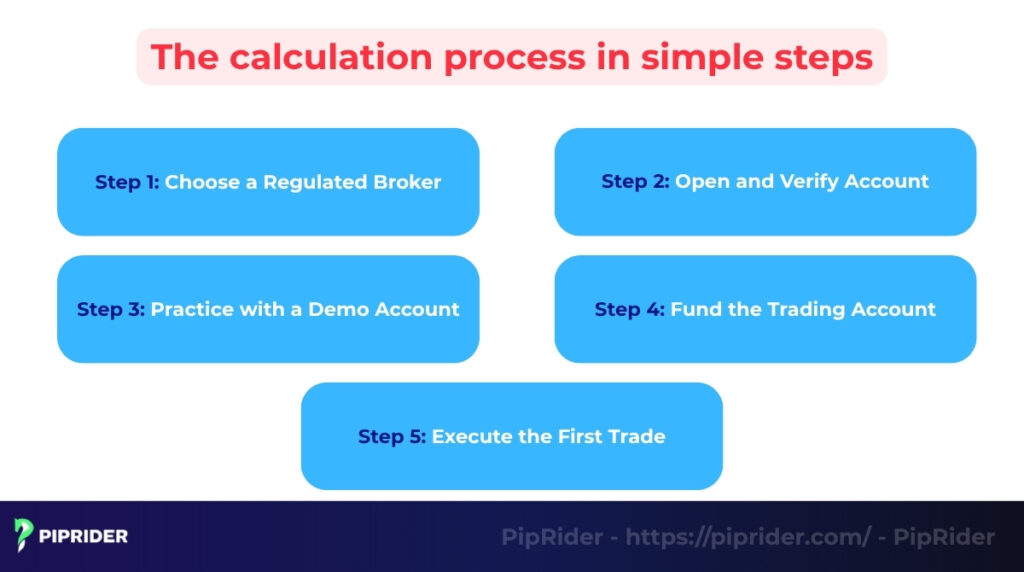
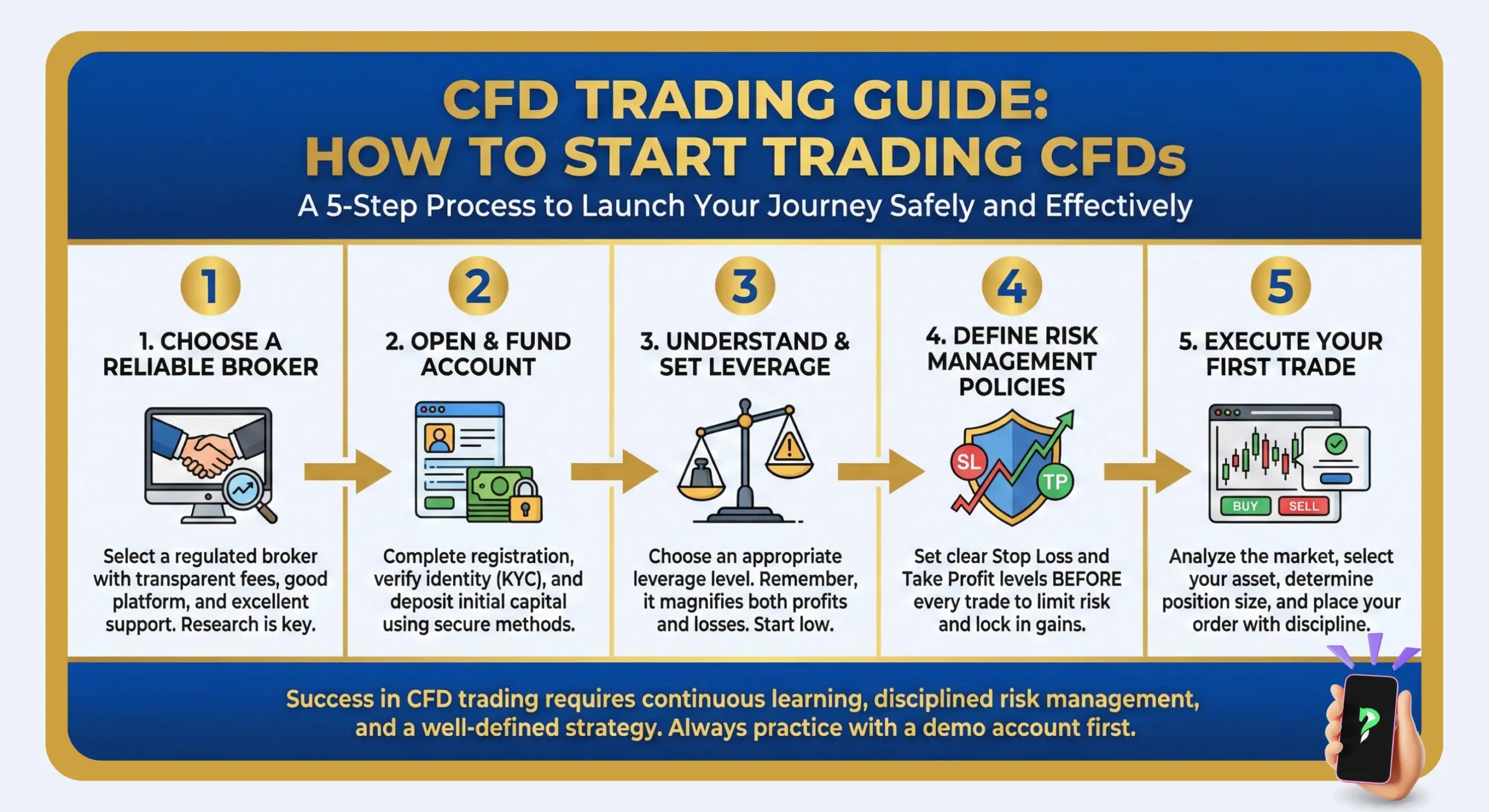
Once a trusted broker is chosen, follow these five essential steps to start trading CFDs safely.
- Step 1: Choose a Regulated Broker. The absolute first step is selecting a platform that is regulated by a Tier 1 financial authority, such as the FCA or ASIC. This is crucial for capital safety and requires verifying their licensing and fee transparency.
- Step 2: Open and Verify Account. Complete the online registration process and fulfill the required KYC (Know Your Customer) verification by submitting necessary identification documents. This establishes your trading account legally.
- Step 3: Practice with a Demo Account. Before depositing any real money, spend ample time practicing with the practice account. Use this risk-free environment to familiarize yourself with the platform, analyze charts, and thoroughly test your chosen trading strategy.
- Step 4: Fund the Trading Account. Deposit a small, initial amount of capital using a secure payment method. It is vital that this be risk capital, money you can fully afford to lose, strictly adhering to your financial risk limits.
- Step 5: Execute the First Trade. Apply your strict risk management rules, which means setting a Stop Loss order immediately, and place your first Buy (Long) or Sell (Short) order on the real market. Do not proceed until you have mastered the use of analysis tools and firmly established your risk parameters.
10. Beginner Trading Playbook: Strategy Rules
For consistency, beginners should follow a set of strict, mechanical rules for every trade. By removing emotion and guesswork, you can evaluate your actual trading edge. These approaches should be tested repeatedly on a demo account before risking real capital.
10.1. Trend Following (The “Friend” Strategy)
Trend following is widely considered the most forgiving approach for newer traders. Instead of attempting to predict tops or bottoms, this strategy aligns your capital with the dominant market momentum. In this setup, we use the 50-period Moving Average as a dynamic support or resistance zone, providing a logical area to “buy the dip” or “sell the rally.”
- Market Condition: A clear, established upward or downward direction (making higher highs or lower lows).
- Entry Rule: Execute a Long (Buy) order when the price pulls back and successfully bounces off the 50-period Moving Average (MA) in an uptrend. (Reverse for downtrends).
- Stop-Loss (SL): Place the SL safely 10–20 pips below the most recent swing low to protect against sudden market noise.
- Take-Profit (TP): Target a strict 1:2 Risk/Reward ratio (e.g., if your SL is 15 pips, your TP is 30 pips). This ensures you only need to be right 40% of the time to remain profitable.
10.2. RSI Overbought/Oversold (Mean Reversion)
When a market lacks a clear trend and is simply bouncing between horizontal boundaries, trend-following tools will fail and cause whipsaw losses. This is where mean reversion excels. By utilizing the Relative Strength Index (RSI), you can identify when a currency pair is temporarily stretched too far in one direction and is mathematically primed to “snap back” to its average price.
- Market Condition: A ranging, sideways, or consolidating market with clear horizontal support and resistance ceilings.
- Entry Rule:
- Sell (Short): Enter when the RSI line drops back below the 70 threshold (confirming overbought exhaustion).
- Buy (Long): Enter when the RSI line rises back above the 30 threshold (confirming oversold recovery).
- Stop-Loss (SL): Place the SL strictly just above the recent local high (for shorts) or below the recent local low (for longs).
- Take-Profit (TP): Exit the position when the RSI returns to the 50 (neutral) level, as this represents the center of the range where momentum stalls.
11. Frequently asked questions about CFD Trading
12. Conclusion
CFD trading is a powerful, flexible instrument that allows investors to profit from global price movements without physical ownership. Its key advantages, leverage, and the ability to trade both long and short, are directly tied to its primary risk: the magnification of potential losses.
Success in this high-risk market hinges on two non-negotiable principles:
- Rigorous Risk Management: Treat the Stop Loss as mandatory. Never risk more than a defined, small percentage of capital per trade.
- Due Diligence: Master the mechanics, account for all costs (spread, commission, swap fees), and choose a Tier 1 regulated broker for safety.
By understanding the mechanics, accounting for the costs (spread, commission, swap fees), and maintaining strict discipline, CFD can become a valuable tool in your investment toolkit.
Don’t mistake leverage for a lack of discipline. Visit Piprider today to access the core educational modules and trading strategies that empower 300,000+ traders to manage risk and trade responsibly.
Infographic Section
-
CFD Trading Guide -
CFD Trading: Advantages vs. Disadvantages -
CFD Trading: Mechanics & Principles