Author for Forex Learn Levels 1–3, creating accessible, research-driven modules that simplify forex and personal finance for beginner to intermediate learners.
Most investors only see risk in a bear market. For active traders, it’s a prime opportunity to profit. Learning how to make money in a bear market involves using specific offensive strategies like short-selling, inverse ETFs, and put options, not just defensive moves. This guide goes beyond theory. It provides an actionable playbook to profit...
Learning how to use AI to trade involves using machine learning, automated bots, and big data to analyze the market. This technology helps you speed up your analysis, remove emotions from your decisions, and find opportunities that the human eye might miss. This guide explains the practical ways to use AI, from backtesting and scanning...
If you want to identify liquidity in trading, start by finding the obvious price levels where traders cluster stop-losses and breakout orders. These zones—found above old highs, below old lows, and around key daily or weekly reference levels, act as magnets for price. Understanding how to spot these ‘liquidity pools’ is the difference between trading...
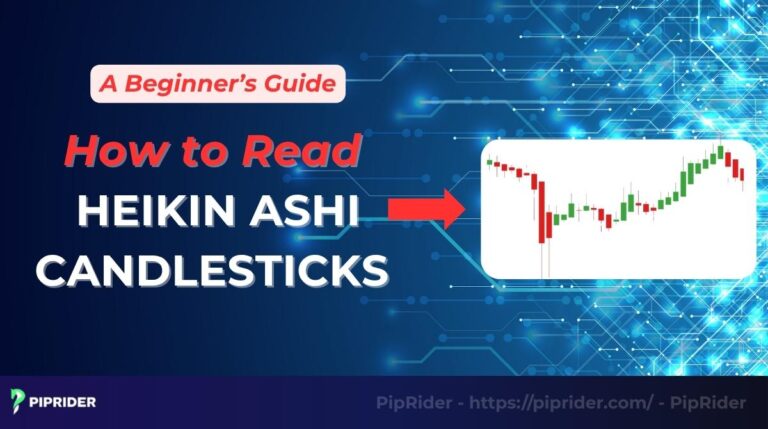
Heikin Ashi candlesticks help me filter market “noise” and see the trend far more clearly than traditional Japanese candles. In my trading experience, learning how to read Heikin Ashi candlesticks correctly is the key to riding a trend longer and avoiding false signals. This A-Z guide explains exactly how to interpret their signals. 1. What...
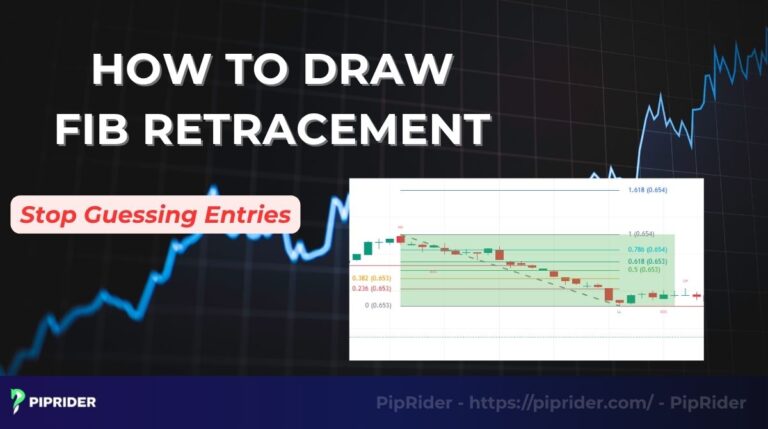
Knowing how to draw fib retracement correctly is one of the most useful skills for trading pullbacks. The key is not just drawing from point A to point B, but choosing the right swing, using a consistent method, and waiting for confirmation before entering. This guide moves beyond basic definitions to show you exactly how...
Learning how to trade indices means you are speculating on the performance of an entire group of stocks (like the S&P 500 or NASDAQ 100) in a single trade, rather than just one company. Most retail traders use CFDs (Contracts for Difference) to get exposure to these markets, often using leverage. This guide provides a...
If you are looking for how to find the required reserve ratio (RRR), the most direct way is to check the official monetary policy publications of a country’s central bank. The RRR is a set percentage that dictates how much of a bank’s total deposits must be held in reserve and cannot be loaned out....
To calculate the Average Daily Range (ADR), you find the average of the simple (High – Low) range of an asset over a set period, like 14 days. Unlike the ATR, the ADR ignores overnight gaps, making it a popular volatility tool for day traders. This guide explains how to calculate the ADR indicator with...
Learning how to trade binary options safely means shifting from gambling to trading with a structured plan. Success in this high-risk market is not about a “secret system”; it is about understanding the mathematical disadvantage, using specific entry/expiry logic, and adhering to strict legal and risk management rules to survive the “all-or-nothing” structure. This guide...
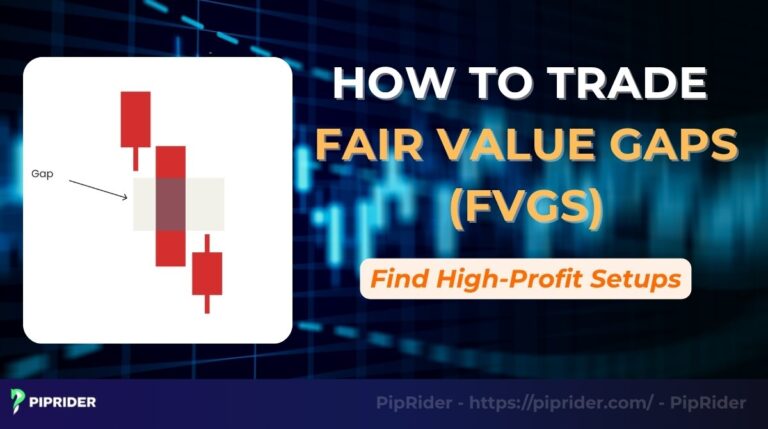
Learning how to trade fair value gaps (FVG) involves identifying a specific 3-candle imbalance where the price moved too quickly. This price action leaves a “Fair Value Gap” (FVG). The core trading strategy is to wait for the price to retrace into this FVG, using that zone (especially the 50% level) as a high-probability entry...
Learning how to control emotion in trading means replacing impulsive reactions like fear and greed with a disciplined, logical process. Learning how to control emotion in trading means replacing impulsive reactions like fear and greed with a disciplined, logical process. It is the fundamental skill that protects your edge and ensures long-term survival in the...
Learning how to trade the Dow Index involves speculating on the price movement of 30 major US blue-chip companies. This guide breaks down what the Dow is and the key factors that move its price. Piprider will explore the different ways to trade it (like CFDs, futures, and ETFs), and cover simple strategies combined with...
Learning how to trade earnings is a high-risk, high-reward skill focused on capturing the extreme volatility that occurs around a company’s quarterly financial report. Traders aren’t just looking at the profit (EPS) or revenue; they are betting on the market’s reaction to this news. This guide details the specific strategies for trading before and after...
To calculate stop-loss (SL), traders use three key methods: the Percentage Risk Method, the Technical Method, or the Volatility Method. Learning how to calculate stop loss is the single most important skill for managing risk. This guide by Piprider.com is a complete, step-by-step answer to that question, moving from simple formulas to the advanced tools...
The Nasdaq 100 (often called NAS100) is one of the most exciting and popular indexes for traders. It is packed with the world’s biggest technology companies, like Apple, Microsoft, and NVIDIA, which makes it very volatile. This high volatility creates many opportunities but also significant risk. This guide is designed for beginners. It will answer...
Do you have a trading strategy idea but are afraid to risk real money to see if it works? The solution is backtesting. Backtesting simulates your trading rules against historical data to reveal how they would have performed in the past. It is the only way to prove your strategy has a statistical edge before...
Many traders know the RSI for measuring price momentum. The Relative Volatility Index (RVI) takes a different approach. Developed by Donald Dorsey, this technical indicator doesn’t just measure the speed of price changes; it measures the strength and direction of the market’s volatility. It helps investors confirm if a trend is stable or if it...
While price indicators like the MACD focus on market direction, they do not account for the level of market participation. The Percentage Volume Oscillator (PVO) addresses this by measuring volume momentum rather than price action. Often referred to as the “MACD for volume,” the PVO helps traders assess whether a trend is supported by rising...